insights
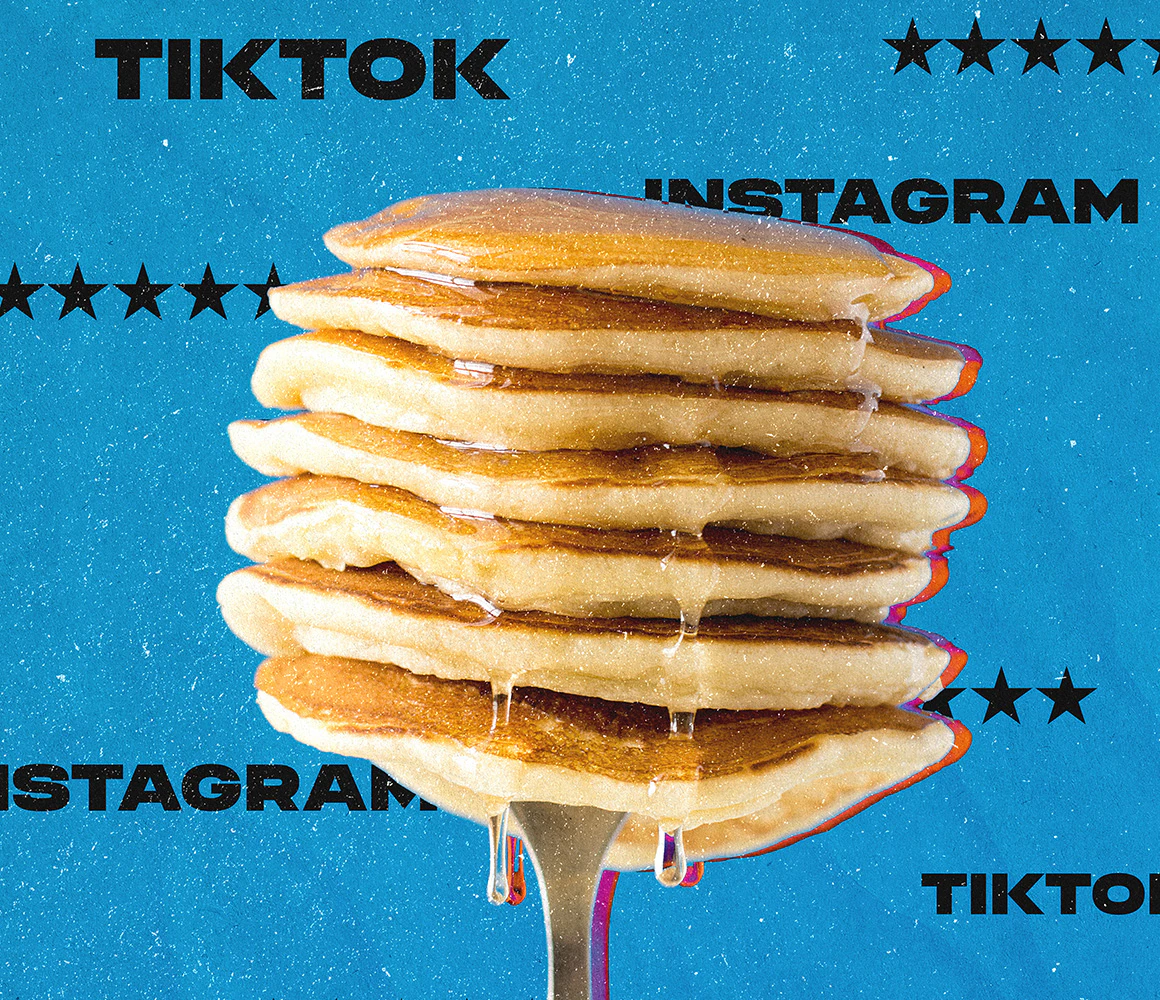
Here’s why customers choose your restaurant before they’ve even tasted the food
Here’s why customers choose your restaurant before they’ve even tasted the food
The decision to book a table is made well before walking through the door. In a saturated market, the restaurants that fill their dining rooms have understood one thing: perception precedes experience.
And that perception is now shaped on social media, on Google, and in the responses of artificial intelligence.
How do people choose a restaurant on TikTok or Instagram?
They are looking for an emotion, not a menu.
A user who types “brunch Montreal” on Instagram sees the most active and visually consistent profiles first. If yours is not among them, you simply do not exist on their radar.
More than 45% of consumers have already visited a restaurant after discovering it on social media. A digital presence is no longer an advantage, it is a prerequisite.1
Does a restaurant’s atmosphere and decor influence customer choice?
Absolutely, and before they even visit. Photos of your dining room, your aesthetic on Instagram, the tone of your posts: all of it communicates an experience.
A restaurant’s branding is the coherence between your decor, your logo, your photos and your voice online. When everything speaks with one voice, people remember you. And when they remember you, they come back, and they recommend you.
Why does a restaurant with beautiful photos attract more customers?
Because the brain decides quickly, and visually. Before reading a single word of your menu, your future customer has already formed an impression.
A beautiful photo evokes quality and desire. A dark or blurry photo, even if the dish is excellent, communicates the opposite. In a world where the decision to book is made in a few seconds of scrolling, your image is your number one sales argument.
What makes a restaurant go viral on social media?
Rarely luck. What spreads is what surprises: a photogenic signature dish, a strong concept, a moment of authenticity from the kitchen. Unfiltered and sincere content outperforms polished productions.
Restaurants that go viral often have something clear to tell, a story, an identity, a detail that catches attention. Your satisfied customers become your best advertising ambassadors, for free.
How do you show up in local searches when someone looks for “restaurant [city]”?
Three essential levers: a complete and up-to-date Google Business profile (recent photos, accurate hours, responses to reviews), an active presence on Instagram with well-written captions, now indexed by Google, and consistent information across all your platforms.
Nearly 70% of users search for restaurants from a mobile device.2 If you don’t show up on the map at the right time, you don’t exist to the customer looking for a place to go tonight.
How can a restaurant get recommended by AI engines in 2026?
This is the question every restaurant owner should be asking right now.
When someone asks an AI “what is the best Thai restaurant in Laval,” who comes up? The establishments whose content is clear, structured and credible across all platforms. This is what we call GEO (Generative Engine Optimization).
In 2026, GEO depends on an active Google Business profile, recent reviews, and consistent information across your website, your listings and your delivery platforms. The more reliable your presence, the more AI engines trust you enough to recommend you.
Are Google reviews enough to fill a restaurant?
They are essential, but not enough on their own. Google reviews build credibility and directly influence consumer decisions. However, what often makes the difference today is freshness: recent, detailed reviews reassure potential customers much more than a reputation that hasn’t been updated in years.
And these reviews directly fuel the recommendations of generative AI. Responding to every review, positive or negative, sends a strong credibility signal, to humans and algorithms alike.
Why do some restaurants have a long waiting list without doing any advertising?
Because they have turned their customers into media. A signature dish shared hundreds of times, reviews that accumulate naturally, an identity so clear it tells itself, that is digital word of mouth.
In 2026, memorable experiences generate shareable content that fuels organic reach and brand awareness. Advertising can accelerate that dynamic, but it cannot replace it.
Does a restaurant need a website if it already has Instagram?
Yes, and for one precise reason: generative AI needs a structured and reliable source to cite you. Instagram is a discovery tool; your website is your proof of credibility.
That is where your menu, your hours, your story and your values live. Without a website, you exist on social media but you are missing when an AI synthesizes a response about the best restaurants in your area.
How do customers find a restaurant when they travel?
They ask an AI or search on Instagram and Google Maps, rarely in a printed guide. A traveler arriving in Quebec City who types “best seafood restaurant Old Quebec” into an AI will see the establishments with the most consistent and well-documented digital presence. Tripadvisor, Google, your website, your social media: every touchpoint matters, and their consistency is what makes you stand out.
In short
Before your customers taste your food, they judge you on what they see, online, on social media, in AI responses. Each of these levers can be worked on. And a well-built digital strategy can turn your restaurant into a destination people seek out before they are even hungry.
At Comunika, we help restaurants and brands get seen, chosen and recommended, by humans and AI alike.
Ready to make your restaurant shine?
Sources
- MGH Agency, Social Media Restaurant Survey, 2019 — mghus.com
- Chowly, How to Tackle Restaurant SEO: A Guide to Top Google Rankings in 2026, 2026 — chowly.com